Guide
The Plant Dyes Behind Our Cloth
Every bhumi garment is colored with botanical dyes, never synthetic ones. From indigo leaves and madder roots to turmeric and kashish, a slow dye made from fermented sugar cane juice and iron, here is what we use, where it comes from, and how it behaves on different fibers.
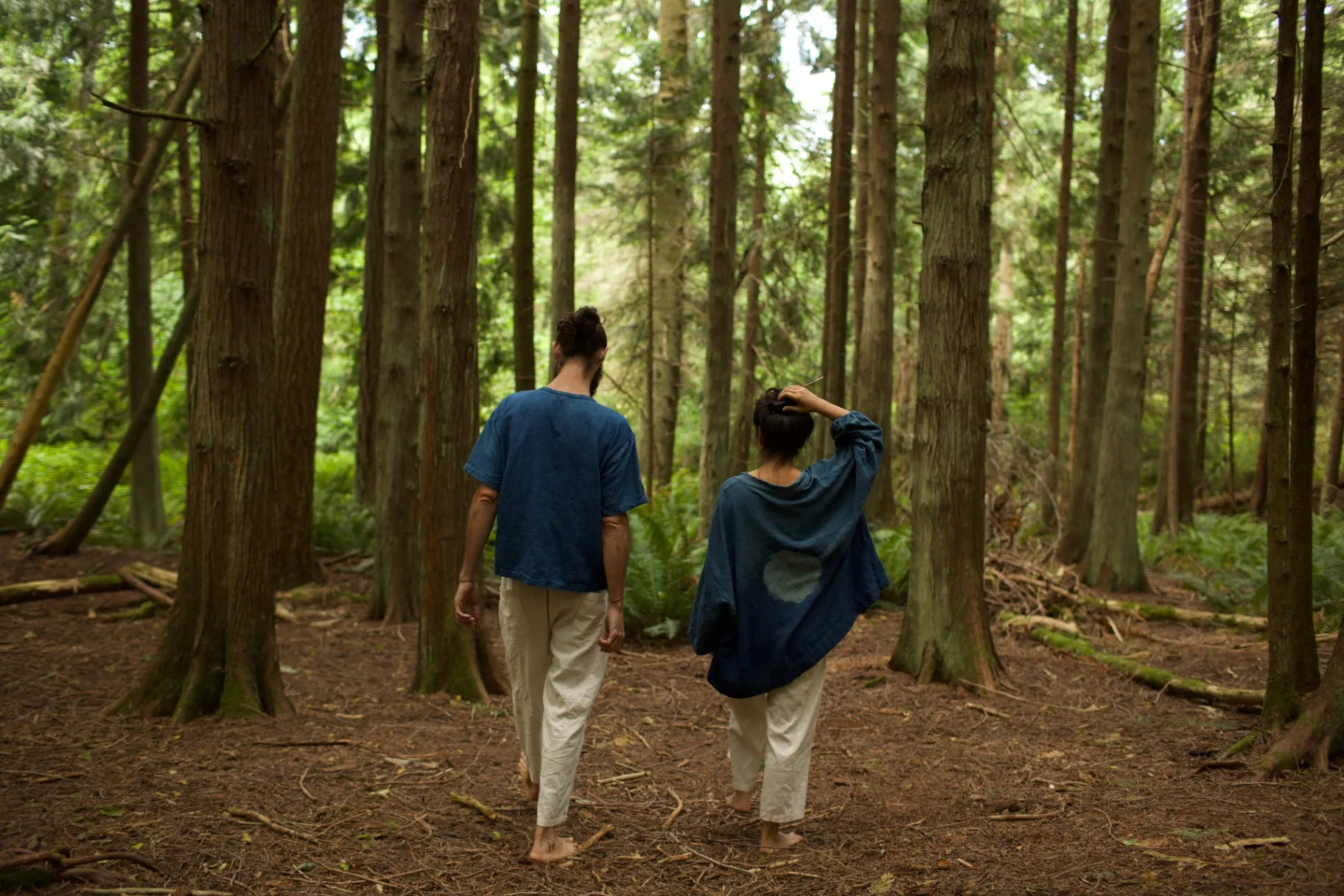
Indigo
- Where it comes from
- Indigo is made from the leaves of the indigo plant (Indigofera tinctoria and related species). The leaves are fermented or processed into a pigment, then used in a vat to dye cloth.
- Colors it makes
- Pale sky blue to deep midnight navy, built up by dipping the cloth repeatedly. The color turns from green to blue as the cloth meets the air.
- Best on
- Cotton and linen, with silk and wool also taking it well.
Madder
- Where it comes from
- Madder is dyed from the roots of the madder plant (Rubia species, including Indian madder, also called manjistha). The roots are dried and ground.
- Colors it makes
- Warm reds, terracotta, rust, and dusty pinks, depending on the mordant and how long the cloth stays in the dye.
- Best on
- Silk and wool take madder most richly, with cotton and linen also dyeing well when properly prepared.
Turmeric
- Where it comes from
- Turmeric dye comes from the root (rhizome) of the Curcuma longa plant, the same spice used in cooking.
- Colors it makes
- Bright golden yellow to deep saffron. Combined with indigo it makes greens.
- Best on
- Silk and wool hold turmeric best. It is less lightfast than other dyes and fades faster in strong sun, so we recommend gentle care.
Kashish
- Where it comes from
- Kashish is made from sugar cane juice that is fermented with iron rods. Over time the iron reacts with the fermenting juice and creates a dark, mineral-rich dye bath.
- Colors it makes
- A range of soft greys, deepening to rich charcoal and black, and sometimes warm browns. Every batch and every cloth gives its own shade.
- Best on
- All of our natural fibers: raw silk, linen, cotton, and camel wool.
Gentle hands
Care for plant-dyed clothing
- Wash the first few times separately, as some dye may release.
- Use cool water and a gentle, pH-neutral detergent.
- Avoid bleach and harsh stain removers.
- Dry in the shade, away from strong direct sun, especially garments dyed with turmeric.
- Iron on low heat (silk: low, inside out).
- Natural colors may soften and change gracefully over time. That is part of the cloth's life.
Curious about the cloth itself? Read about the natural fibers we wear.
Shop our plant-dyed clothing